

Where to stay in Mirissa: a guide to the areas
Mirissa is small, but where you sleep changes the trip. The beach, the main road, the inland lanes, the hill and the harbour end compared, with who each one suits.
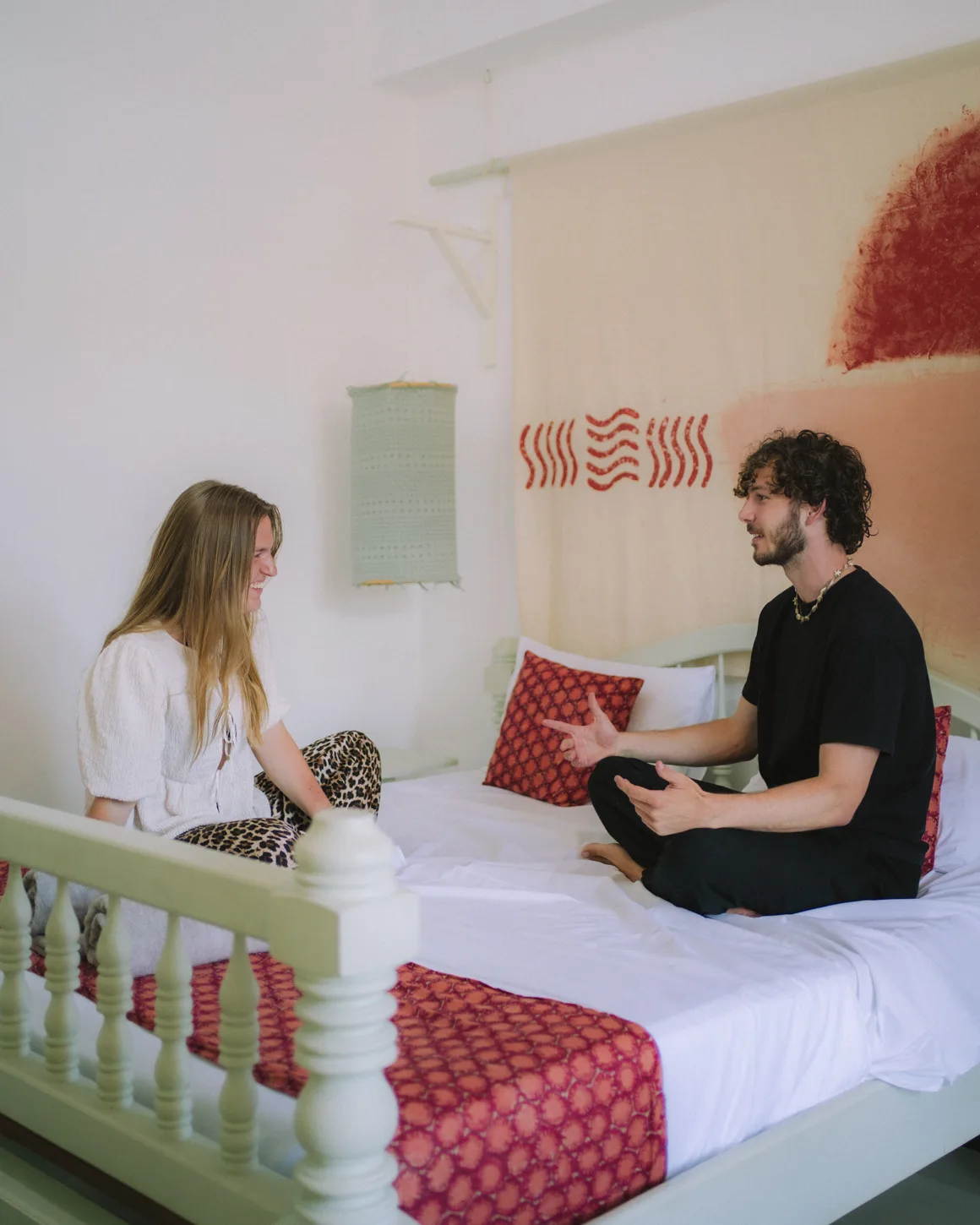
Mirissa is small enough that every listing can claim to be “close to the beach” and be telling the truth. That makes it hard to choose from a booking site, because the things that actually differ between one place and the next are noise, hills and how you get home at night, and none of those show up in the photos.
We run a hostel here, so treat this as a local’s guide with an obvious interest declared. The areas come first. Where we fit comes last.
How Mirissa is laid out
One main road, Matara Road, runs along the coast. The beach is on one side of it and the town climbs inland on the other. The shoreline is a series of small bays, and the main beach sits in the biggest one.
The fishing harbour is at the western end. That is where the whale watching boats leave from. Coconut Tree Hill is at the eastern end, about ten to fifteen minutes on foot from the main beach. Weligama, the next town along and the place most people learn to surf, is about ten minutes west by road.
Almost everything else is somewhere between those points, and most of it is walkable.
On the beach
Staying on the sand means you wake up to the sea and walk to breakfast barefoot. It is what most people picture when they book Mirissa.
The trade-off is sound. The restaurants and bars are on the beach too, and some of them play music late. If you are a light sleeper, ask how close the nearest bar is before you book, not after. Beachfront also costs more than anywhere else in town for the same room.
Suits: short stays, couples, anyone who wants the sea outside the door and plans to be up late anyway.
Along the main road, in the middle of town
This is the practical centre: shops, ATMs, places to eat, and buses in both directions. Galle is one way and Matara is the other, so day trips are easy without hiring a driver.
The beach is a few minutes’ walk rather than a few steps. The road itself is busy during the day, so it is worth asking whether a room faces the road or the back.
Suits: people without a scooter, anyone arriving late or leaving early, and anyone who would rather be near everything than directly on the sand.
The inland lanes
Cross the main road, walk inland for five or ten minutes, and Mirissa becomes a different place. Narrow lanes, gardens, family guesthouses, and monkeys on the roof in the morning. It is quieter and it is usually the cheapest part of town.
What you give up is convenience. The lanes are dark at night and easy to get lost in for the first day or two, and the walk back from dinner feels longer than the walk there. Some places are up a hill, which matters more at midday than it sounds.
Suits: longer stays, tight budgets, light sleepers, people who like a homestay and a home-cooked breakfast.
The eastern end, towards Coconut Tree Hill
Past the end of the main beach the coast breaks into smaller coves, with Coconut Tree Hill above them. It is calmer than the middle of the beach and popular with people who want sunrise or sunset on the doorstep.
You are further from the centre of town here, so expect a ten to fifteen minute walk for most things, or a short tuk-tuk ride at night.
Suits: people who want quiet and a view and do not mind the walk.
The western end: the harbour and Secret Beach
The harbour is a working fishing port. It is busy early in the morning, which is ideal if you are booked on a whale watching trip and would rather walk to the boat than find a tuk-tuk before dawn.
Beyond the harbour, a steep road climbs over the headland to Secret Beach. The places up there are some of the most secluded in Mirissa. They are also the least convenient: it is roughly a twenty minute walk up a proper hill from the harbour road, and most people end up paying for tuk-tuks or renting a scooter.
Suits: early boat trips at the harbour, seclusion on the headland, and people with their own transport.
Hostel, guesthouse or villa?
Mirissa is mostly small places. There are very few large resorts, which is part of why it feels the way it does.
- Hostels are the cheapest beds and the easiest way to meet people if you are travelling alone. Check whether the dorm has air conditioning. In this climate that matters more than almost anything else on the listing.
- Guesthouses and homestays are family-run, good value, and the best way to eat a real Sri Lankan breakfast. Quality varies, so read recent reviews rather than old ones.
- Small hotels and villas give you a pool and privacy, usually on the beach or up on a hill. Better for couples and groups than for solo travellers.
Things to check before you book
- Air conditioning or fan. Some listings show both prices for the same room.
- Hot water. Not every budget room has it.
- The real walk to the beach. Measure it on a map. “Five minutes” in a listing can mean five minutes by tuk-tuk.
- Wi-Fi, if you need to work. A guesthouse connection is fine for messages and not much else. If you have calls, plan to work from a proper coworking space.
- The season. December to April is peak, and the good places fill early. Outside those months you have more choice and lower prices. More on that in the best time to visit Mirissa.
Where MiRA fits
MiRA is on Matara Road in the middle of town, about 70 metres from the centre and four minutes’ walk from Mirissa Beach. In the terms of this guide, that is the main-road option: close to everything, a short walk to the sand rather than on it.
There are four private rooms, each with a double bed, a private bathroom with hot water, a balcony, and both fan and air conditioning. There are two dorms, a six-bed female-only dorm and a ten-bed mixed dorm, and both are air conditioned. Dorm beds start at $6 a night in the mixed dorm and $10 in the female dorm. Private rooms start at $33.
What is different is the rest of the building. There is a yoga and reformer Pilates studio, a rooftop ice bath, a coworking space that is open around the clock, and a café, and guests get a discount on classes and coworking passes. Reception is open from 7am to 7pm, the building is open 24 hours with night security, and bags can be stored for free before check-in or after check-out.
It suits people who want to train or work while they are here, and solo travellers who want to meet people without staying in a party hostel. If what you want is to fall asleep to the sound of waves, book the beach. If you want silence and monkeys, book the lanes.
The short version
- Beach: the view and the atmosphere, with late music and higher prices.
- Main road: the most convenient, a few minutes from the sand.
- Inland lanes: the quietest and cheapest, with a longer walk home.
- Coconut Tree Hill end: calm coves and views, further from town.
- Harbour and Secret Beach: early boats or real seclusion, and you will want transport.