

The best time to visit Mirissa, month by month
Mirissa's seasons in plain terms: when the sea is calm, when the whales are here, when it rains, and when the town is cheapest. Written by people who live here.
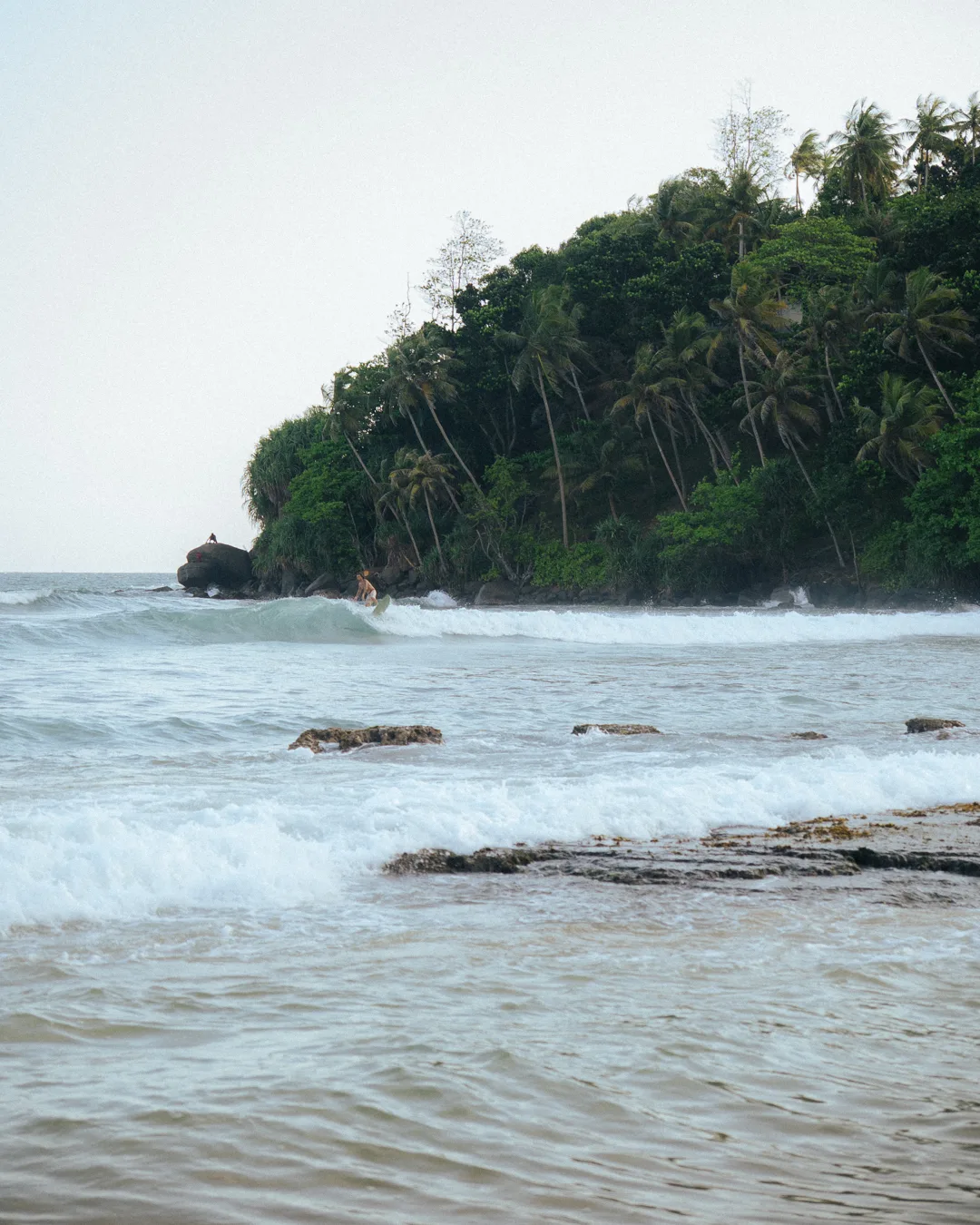
Most guides will tell you to come between December and March. That is correct, and it is also the least useful advice available, because it describes the months when everyone else is here and prices are at their highest.
The more useful question is what you actually want from the trip.
The short version
Mirissa’s temperature barely moves. Daytime highs sit between 29°C and 31°C all year, and nights fall to around 24 to 26°C. Nobody has ever needed a jacket here.
What changes is the sea, and the rain.
The southwest monsoon runs roughly May to October. That brings rough water, the year’s strongest winds in June and July, and rain on ten to fourteen days a month. From November to April the ocean settles, the skies clear, and the town fills up.
So the seasons here are really about the water, not the temperature.
December to March — the peak
This is Mirissa at its best and its busiest. Rain is at its lowest in January and February, the sea is calm enough for swimming and snorkelling, and the whale boats run every morning.
March is the warmest month of the year at around 31°C, with up to nine hours of sun a day.
The trade-off is obvious: this is when accommodation is most expensive and hardest to find, and when the beach is fullest. If you are coming in this window, book early. December in particular goes first.
Whale season, specifically
Blue whales are off this coast from December through March, with the wider whale season running November to April. Boats leave early, when the water is calmest.
Between May and July, most whale tours stop entirely. The sea is too rough to take boats offshore safely. If whales are the reason you are coming, that rules out a third of the year.
April and November — the shoulders
These two months are, for our money, the best value in the calendar. The sea is usually still workable, the whales are often still around, the rain has not properly set in, and the town is noticeably quieter than in January.
You are taking a small gamble on the weather. Most years it pays off.
May to October — the quiet months
The monsoon arrives. Rain comes in bursts rather than all day, but the sea turns rough and the whale boats mostly stop. September has the least sunshine of the year, at around six hours a day.
Here is the case for coming anyway.
The town empties. Accommodation is at its cheapest. The landscape is greener than at any other point in the year. And if your plan involves being indoors for part of the day — a class, a desk, a long lunch — the rain matters far less than it sounds.
We run daily yoga in Mirissa and reformer Pilates through the whole monsoon, and the coworking space does not care what the sea is doing. Some of our best months for people staying two or three weeks are the ones the guidebooks tell you to avoid.
A practical note on the water
Ocean currents along this coast can be strong, particularly during and just after the monsoon. Check the flags, and ask before you swim. Tap water is not drinkable anywhere in Sri Lanka, so stick to filtered.
So when should you come?
If you want guaranteed sun, calm sea and whales, come January to March and book ahead.
If you want the same thing with fewer people and lower prices, come in April or November.
If you are staying a while, working, training, or simply not planning your day around the beach, the monsoon months are quieter, cheaper and greener, and the town belongs to the people who live here.