

Whale watching in Mirissa: what actually happens on the boat
Why blue whales come this close to Mirissa, when the season runs, what a morning on the water is really like, and how to pick an operator that behaves well around the animals.
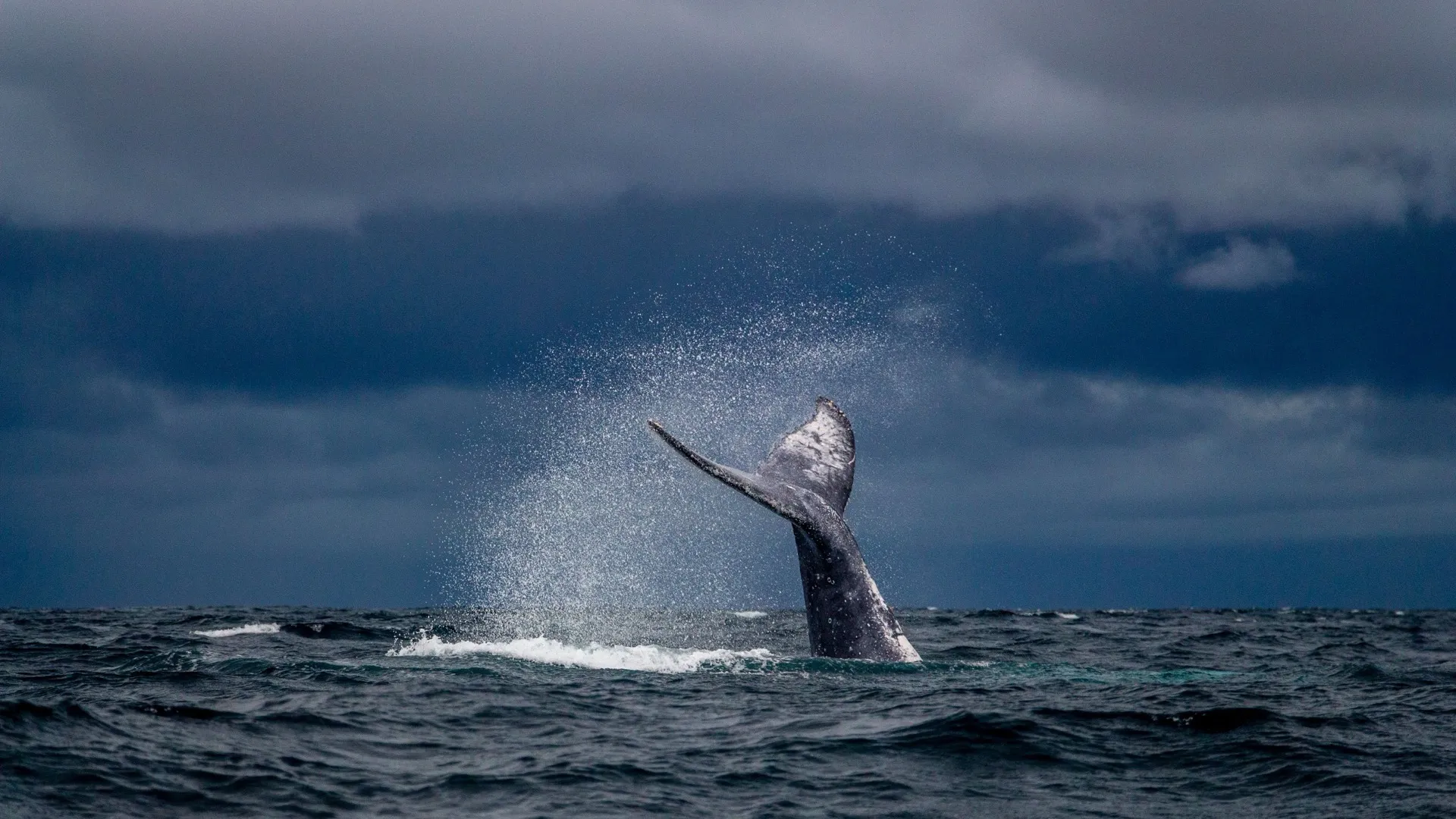
Mirissa is one of the few places in the world where you can leave a beach at dawn and be alongside the largest animal that has ever lived before breakfast. That sounds like marketing. It is mostly geography.
Why the whales are here
Most coastlines have a wide continental shelf. The seabed slopes away gently for tens of kilometres before it drops into deep water, and the animals that live in deep water stay well out of sight of land.
South of Sri Lanka, the shelf is unusually narrow. Off Dondra Head, the southernmost point of the island and a short run east of Mirissa, deep water comes close to shore. Blue whales feed where cold, nutrient-rich water rises up that drop-off, and they migrate along it. The practical result is that a boat can reach whale habitat in an hour or two rather than most of a day.
That is the whole reason this stretch of coast became known for whales, and why the trips are shorter here than in most whale watching destinations.
What you might see
Blue whales are the draw. They are the largest animal known to have existed, and seeing one surface changes your sense of scale permanently.
You may also see sperm whales, which travel in groups and behave quite differently, and Bryde’s whales. Spinner dolphins are common and often turn up in large numbers, sometimes in the hundreds. Flying fish are constant.
What you will not get is a guarantee. These are wild animals in open ocean. Some mornings are extraordinary and some produce nothing but water and dolphins. Any operator promising a sighting is either lucky or lying.
When the season runs
The whale season here runs roughly November to April, with December to March the most reliable window.
Between May and July, the southwest monsoon makes the sea too rough to go offshore safely, and most operators stop entirely. If whales are the reason you are travelling, that rules out a large part of the year. April and November sit at the edges and can be very good, with fewer boats out.
What the morning is actually like
Boats leave early, usually before sunrise, because the sea is calmest at first light and gets choppier as the day warms up. Expect to be awake well before you would like to be.
The run out takes one to two hours depending on where the whales have been seen recently. Trips generally last three to five hours in total.
Be honest with yourself about seasickness. The Indian Ocean beyond the shelf has a long swell, and a boat sitting still while everyone waits for a whale to resurface is the worst possible motion for a queasy stomach. If you are prone to it, take something the night before as well as in the morning, sit low and central in the boat, and keep your eyes on the horizon rather than on a phone screen. People underestimate this constantly and spend the whole trip below deck.
Bring water, sun cover and a layer for the wind on the way out. The sun on open water is harsher than it feels.
Choosing an operator
This is the part worth thinking about, because whale watching done badly is genuinely harmful to the animals.
The behaviour to look for is a boat that approaches slowly and from the side rather than head on, keeps a respectful distance, cuts engines when close, and does not cut across a whale’s path to get a better photograph. Guidelines for responsible whale watching generally recommend keeping a minimum distance and limiting how long any one boat stays with an animal.
The behaviour to avoid is a crowd of boats racing towards the same blow, jockeying for position. It is stressful for the whales, it can separate mothers from calves, and it is unpleasant to be part of.
Ask before you book how many boats the operator runs, how many people are on each, and what their approach rules are. An operator who answers that question well is usually the one you want. Smaller boats are less comfortable in swell but tend to be better behaved.
A note on expectations
The trips that disappoint are usually the ones where somebody expected a documentary. What you actually get is a back, a blow, and if you are fortunate a tail as the animal dives. It lasts seconds.
It is still worth the early start. The scale of the thing does not come across on video.
Practical details
Trips run from Mirissa harbour, a short walk from the beach and about four minutes from us. Book the night before rather than on the day in peak season, particularly around January and February when boats fill.
Go early in your stay if you can. That way a rough morning or a blank day is not your only attempt.