

Being a digital nomad in Mirissa: the 2026 version
Sri Lanka launched a digital nomad visa in February 2026. What it costs, who qualifies, and what living and working in Mirissa is actually like once you stop doing visa runs.
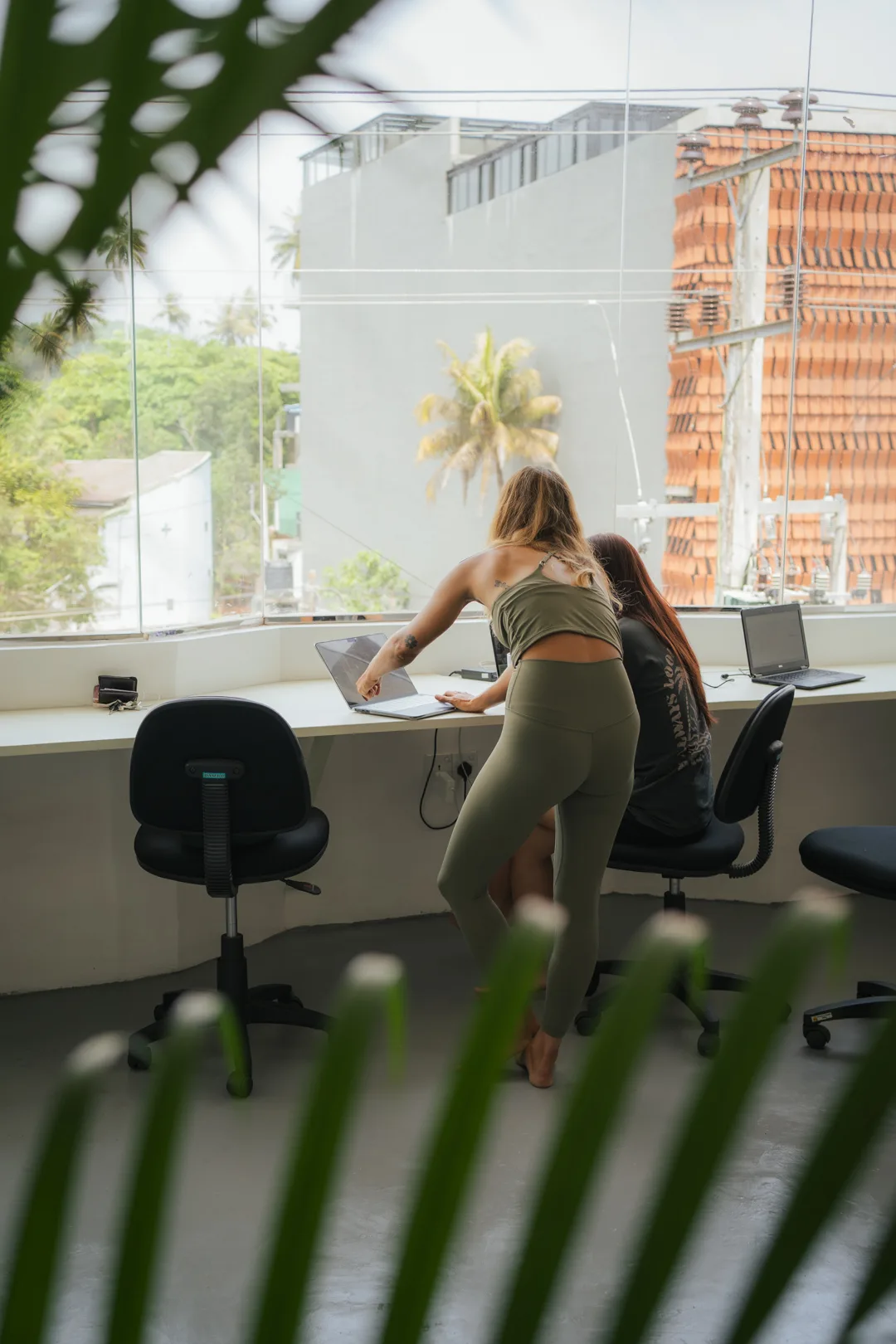
For years, working remotely from Sri Lanka meant a tourist visa, a calendar reminder, and a flight to Malaysia every month or two. That changed in February 2026, when Sri Lanka launched a digital nomad visa. It is worth understanding before you decide how long to stay, because it changes the shape of a trip here entirely.
The visa, briefly
The visa is for people working remotely for clients or employers outside Sri Lanka. It runs for twelve months and is renewable. You need to be earning at least $2,000 a month, and the application fee is $500. You apply online through the Department of Immigration and Emigration.
The important restriction: it covers remote work for foreign companies only. You cannot use it to work for a Sri Lankan business.
Rules on things like this change often, so check the Department of Immigration and Emigration’s own pages before you apply rather than trusting any blog, including this one. What follows is about the part we do know well: what living here is actually like once the paperwork is done.
Why Mirissa specifically
Most nomads in Sri Lanka land in Colombo first and then work out where they want to be. The south coast is where a lot of them end up, and Mirissa sits in the middle of it: Weligama’s beginner surf is ten minutes west, Dikwella and the quieter beaches are half an hour east, and Galle is under an hour away for anything you cannot buy locally.
It is small. You will recognise faces within a week. That is either the appeal or the problem, depending on the person.
What it is not is a city with infrastructure. There is no coworking district, no fibre to every building, and no twenty-four-hour anything except a handful of places. That matters more than the beach does when your calendar is full.
The bit nobody mentions: the timezone
Sri Lanka is UTC+5:30, which decides whether this works for you far more than the wifi does.
If your team is in Europe, this is close to ideal. London is four and a half or five and a half hours behind depending on the season, so your afternoon covers their morning and you get your whole morning back. Surf at dawn, train at 8:30, start work at midday.
If your team is in Australia or Singapore, you overlap almost completely and nothing needs to change.
If your team is on the US West Coast, be honest with yourself. A 10am Pacific call is 11:30pm here. People do it, and they end up nocturnal, which wastes the entire reason for being on a tropical coast. East Coast is workable: a 9am New York meeting is 6:30 or 7:30 in the evening.
What breaks, and what to check
I have written about this in detail in what actually breaks when you work remotely from the south coast, but the short version:
Power cuts still happen in heavy weather, so ask any café or space whether they have a generator. Monsoon degrades terrestrial connections. Most café wifi is a consumer line shared by everyone in the room, so the speed on the sign is the best case with nobody else on it. And check upload speed, not just download: a line that tests at 80 Mbps down might manage 5 up, which is the difference between being on a call and being a frozen square.
Heat throttles laptops. If you compile or render anything, an open-air café in 32-degree humidity will cost you real time.
A month here, roughly
The parts we can price exactly, because they are ours:
- Coworking: $8 a day, $42 a week, or $92 a month with a dedicated desk and a locker. Starlink, typically 100 to 200 Mbps, air conditioning, power at every seat, open 24/7 with night security. Eight desks, so it does not turn into a crowd.
- A bed: dorms from $6 a night, private rooms from $33. Weekly and monthly rates are better; message us.
- Coffee: a flat white is 1,100 rupees, a long black 900. The café is open 7am to 7pm and will bring it to your desk upstairs.
- Staying sane: yoga is $10, reformer Pilates is $20, the rooftop ice bath is $5 and runs 9:30 to 12:30 daily. Guests get 20% off all of it, and 50% until 31 October 2026.
What we cannot price for you honestly is the rest: a scooter, a local SIM, rice and curry at the place down the road. Those change constantly and vary by who is asking. Ask in any of the Sri Lanka nomad groups the week before you come, and ask us on arrival.
A realistic week
Nobody works eight-hour days here, and pretending otherwise is how people burn out or end up disappointed.
What actually works: dawn surf or the 7:15am yoga class, reformer at 8:30, ice bath before it closes at 12:30, then a long focused block from early afternoon into the evening when Europe comes online. That is five or six genuinely productive hours, which is more than most people manage in an office.
The social side matters more than it sounds when you are working alone. We run eleven social activities a week, six of them free: a lagoon run club, beach volleyball at sunset, a cooking class, an outdoor cinema night. Remote work in a beach town gets lonely faster than people expect, and a fixed weekly rhythm is the cure.
Who Mirissa suits
It suits people staying weeks rather than days, working European or Asian hours, who want a routine rather than a highlight reel. It suits surfers obviously, and it suits anyone who has worked out that they focus better with a hard stop at sunset.
It does not suit people who need a large professional network on the ground, or who are trying to hold down Californian hours, or who want to work from a different café every day and hope for the best.
If that first description sounds like you, the coworking space is four minutes from the beach and has a desk free most days. Come and try a day pass before committing to anything longer.