

Working remotely from Mirissa: what actually breaks
Power cuts, monsoon internet, heat throttling and the timezone maths. An honest guide to getting real work done on Sri Lanka's south coast.
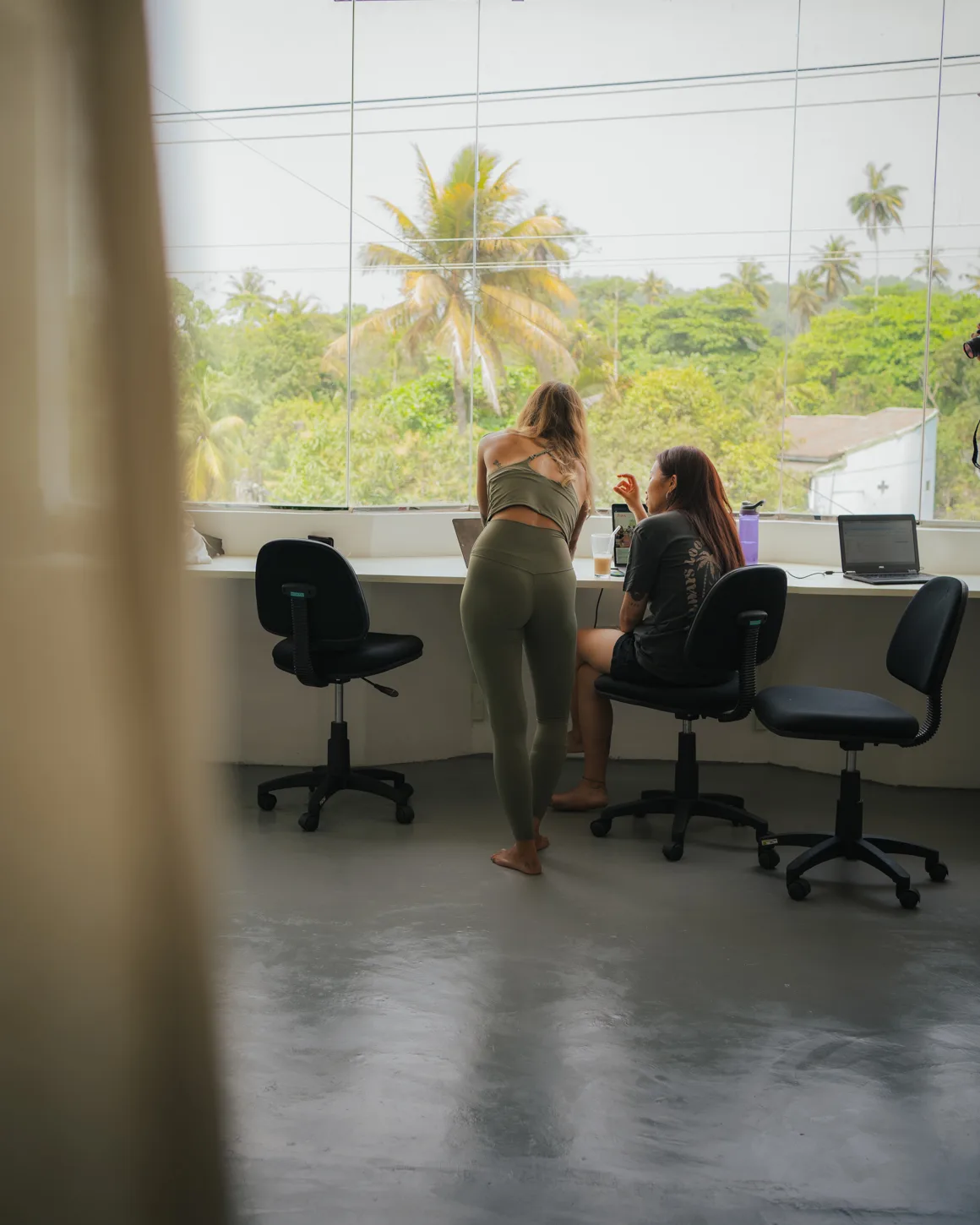
Every guide to remote work in Sri Lanka tells you the wifi is fine and the coffee shops are charming. Both are true often enough to be misleading. Here is what actually goes wrong on the south coast, and what to check before you commit to a month of deadlines here.
The four things that break
Power. Sri Lanka went through extended scheduled outages during the 2022 economic crisis and the grid has stabilised considerably since, but unscheduled cuts still happen, particularly during heavy monsoon weather. A café without a generator or an inverter means your working day ends when the power does. Ask. Most places will tell you honestly.
Monsoon and the shared line. The south coast sits in two monsoon patterns, and heavy rain degrades terrestrial connections. More importantly, most café wifi is a consumer line shared by everyone in the room. Eight people streaming and your video call is the thing that gives. The advertised speed on the sign is the line’s best case with nobody else on it.
Heat. A laptop working hard in 32-degree ambient temperature throttles. If you compile, render or run anything heavy, an un-airconditioned open-air café will cost you real time, and the fan on your machine will run all day.
Upload speed, which nobody advertises. Download determines whether Netflix works. Upload determines whether your face arrives on a call. Consumer connections here are often heavily asymmetric, so a line that tests at 80 Mbps down might manage 5 up. Run a speed test and look at the second number.
The timezone maths
Sri Lanka is UTC+5:30, which is one of the more useful positions in the world for remote work depending entirely on where your colleagues are.
Europe works well. London is 4.5 or 5.5 hours behind depending on the season. A 9am start in Colombo overlaps with most of the European working day if you work afternoons and evenings. This is the easiest setup on this coast by a distance.
Australia and Singapore are comfortable. Two and a half to four and a half hours ahead. Full overlap, no compromise.
The US is hard. New York is 9.5 or 10.5 hours behind. A 9am East Coast meeting is 6:30 or 7:30 in the evening here, which is workable. West Coast is not: a 10am Pacific call lands at 11:30pm. People do it, but it inverts your day and you will not surf in the mornings.
Worth doing the maths before booking, because it determines whether you get the version of this that people post about.
What to check before you settle somewhere
Run a speed test at the time of day you actually work, not at 8am when the room is empty. Look at upload as well as download.
Sit in the chair for an hour before you commit to a month. Most café seating is designed for a forty-minute coffee, and the difference between that and a six-hour day is your lower back.
Find the power outlets. Count them. In a lot of places there are two and they are behind the sofa.
Ask about the generator, and ask what happens during a cut rather than whether cuts happen.
Check whether you can take a call. Many beautiful open-air spaces have no acoustic separation at all, which is fine until you need to talk for an hour.
How we solved it
The coworking space at MiRA runs on Starlink, typically 100 to 200 Mbps. The reason that matters is not the brand: satellite bypasses the local terrestrial infrastructure entirely, so the failure modes that affect everyone else on the coast during heavy weather largely do not apply. It is the single biggest difference between working here and working in a café.
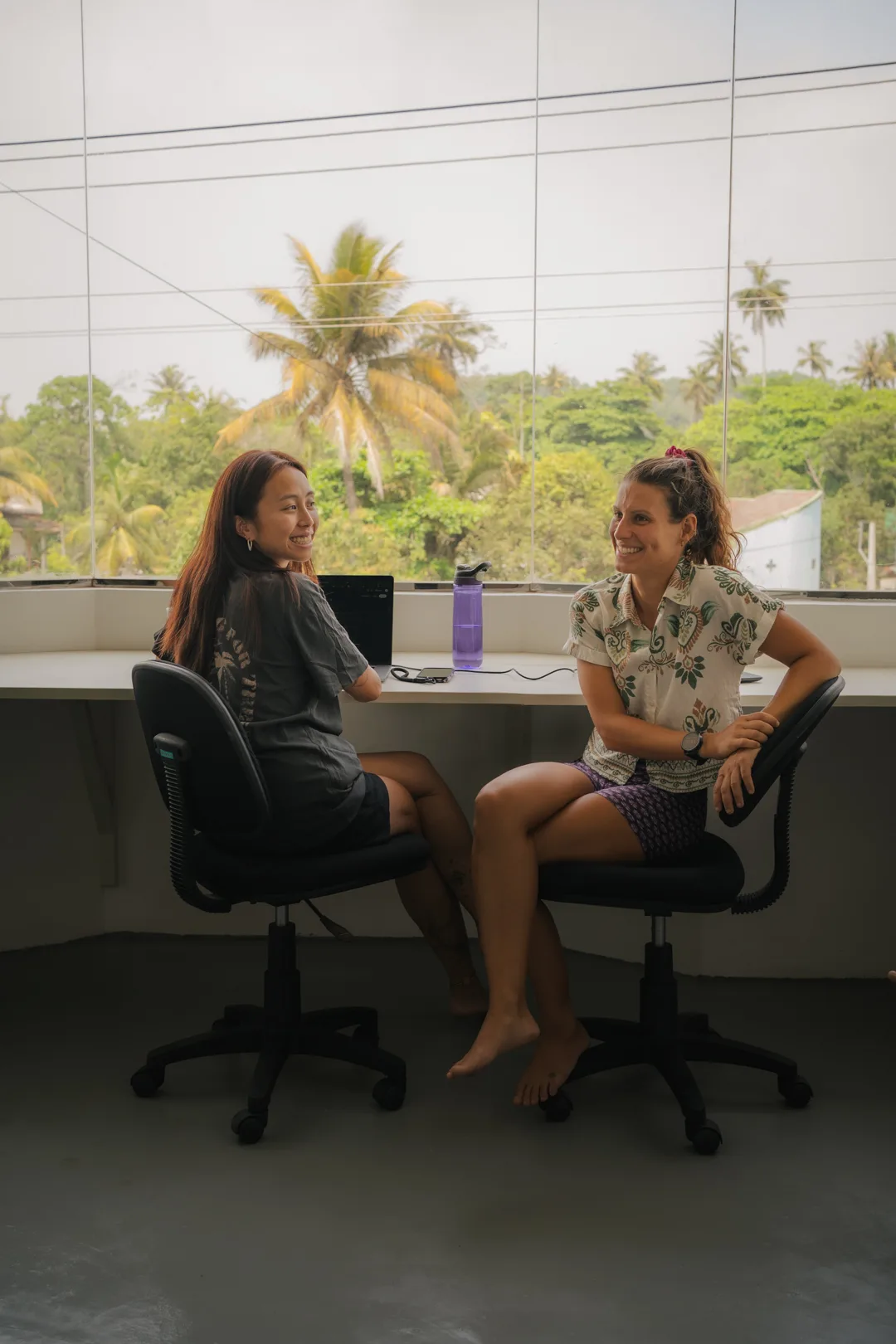
The room is air conditioned with power at every seat and ergonomic chairs, which sounds mundane and is the actual product. It is open 24/7 with night security, so if your calls are at midnight because your team is in California, the building does not close on you.
Calls happen in the common area rather than at the desks, which keeps the desk space quiet for focused work. There is a café one floor below that will bring coffee up to your desk.
Day pass is 8 dollars, a week is 42, and monthly includes a dedicated desk and a locker. Guests staying at MiRA get 20% off. Until 31 October 2026 that rises to 50%. It is four minutes’ walk from Mirissa Beach, which is the part that makes the rest of it worth arranging.
The honest version
Mirissa is a very good place to work remotely if your hours suit European or Asian time, if you set yourself up somewhere with a proper connection and a proper chair, and if you accept that the beach is four minutes away and will win occasionally.
It is a bad place to work remotely if you are trying to hold down US West Coast hours, or if you plan to work from a different café every day and hope. The people who make it work here treat it like an office with a very good commute, rather than a holiday they happen to be answering emails from.