

Practising yoga while travelling Sri Lanka: what nobody tells you
Dirty mats, mosquitoes, classes that quietly do not happen. What yoga in Sri Lanka is really like, and how to keep a practice going on the road.
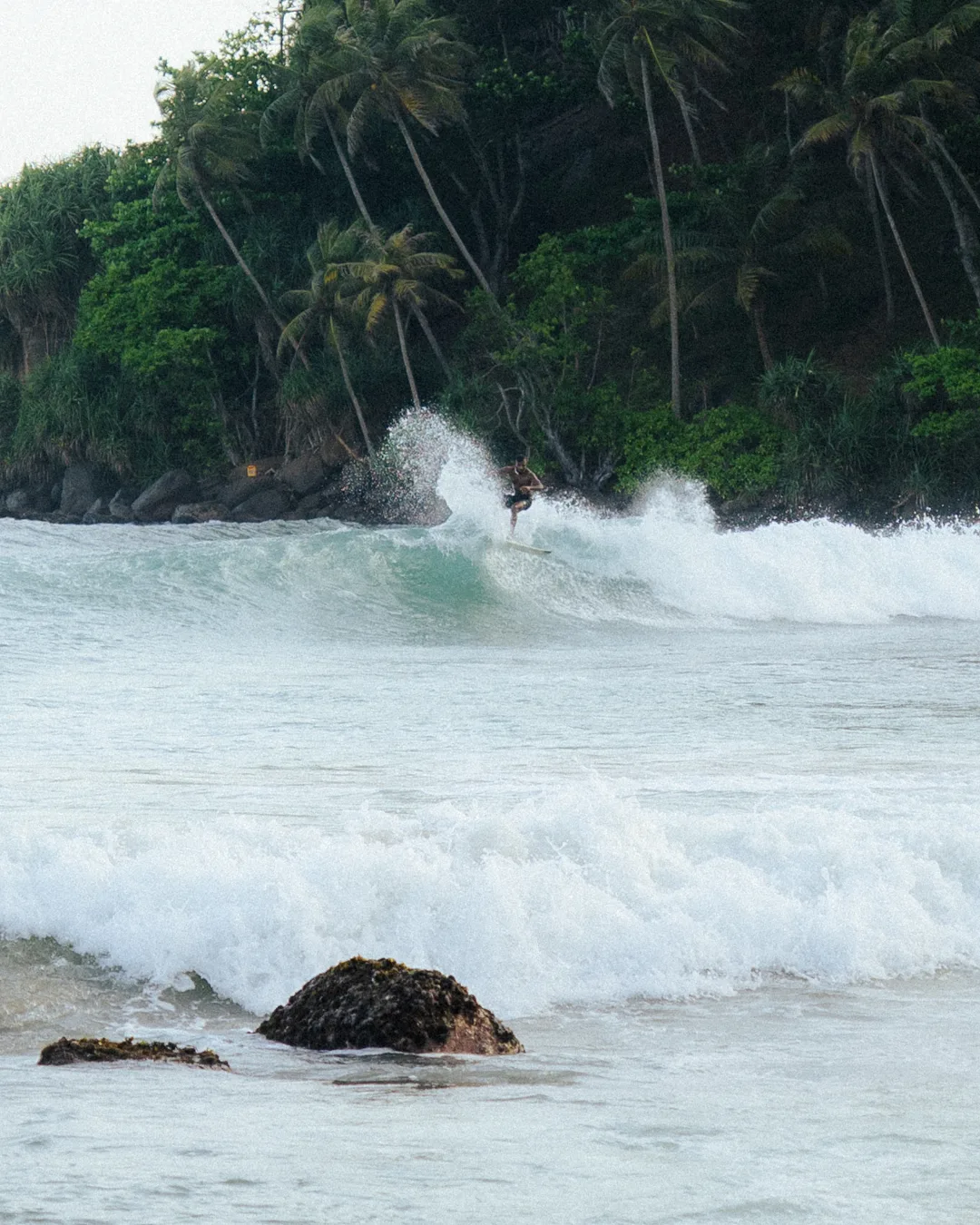
The brochure version of yoga in Sri Lanka is an open shala at sunrise, palms overhead, the sea somewhere below. That version exists. It is genuinely lovely and you should do it at least once.
The other version is turning up for a 7am class that nobody appears to run, on a mat you would rather not put your face near, while something bites your ankles. That version is much more common than the photographs suggest, and it is the reason a lot of people give up on practising within a week of arriving.
None of this is a reason not to practise here. It is a reason to arrive knowing what you are walking into.
The mats
Start with the thing everyone notices and nobody says.
Shared mats in a hot, humid country get used several times a day, sweated on, rolled up damp, and stored somewhere with no airflow. Unless a place has a genuine cleaning routine — and many do not — the mat you are handed has absorbed a fortnight of other people’s practice. You will smell it before you touch it. Putting your face on it in downward dog is the moment most people decide to buy their own.
Two workarounds. A travel mat is 1kg and folds into a daypack, and if you plan to practise more than a handful of times it is the single best thing you can carry. Failing that, a lightweight mat towel weighs almost nothing, layers over whatever you are given, and washes in a sink.
If you do neither, ask before you commit. “Do you clean the mats?” is a fair question and the answer tells you a lot about the operation generally.
Classes that quietly do not happen
A schedule on a website or a chalkboard is a statement of intent, not a commitment. Teachers travel. Seasons change. Some places run a full timetable in January and one class a day in June without updating anything.
You will occasionally arrive to find nobody there, or a locked gate, or a friendly person who explains the teacher left last month. This is not malice. It is a lot of very small operations run by people who are also doing four other jobs.
Message ahead the day before. WhatsApp is the working phone system of Sri Lanka and almost everyone answers it. A one-line “is the 8am running tomorrow?” saves a wasted morning.
Be suspicious of a schedule with no date on it. If nothing indicates when it was last updated, assume it was a while ago.
Have a second option. In any town with more than a couple of studios, know where the backup is before you need it.
The mosquitoes
Nobody warns you about this and it is genuinely the thing that ruins classes.
Open-air shalas are open to everything, and dusk classes in particular are a feast. You will be still, mostly horizontal, and often on the floor where they live. Savasana becomes an exercise in not moving while being eaten, which rather undermines the point.
Repellent on the ankles and feet before you go, not after you arrive. Long, loose trousers rather than shorts for evening classes. And if a place burns coils or has fans running, that is not decoration — fans in particular are the most effective mosquito control there is, because they cannot fly in moving air.
Morning classes have far fewer. If you are choosing between an 8am and a 6pm in an open space, take the 8am.
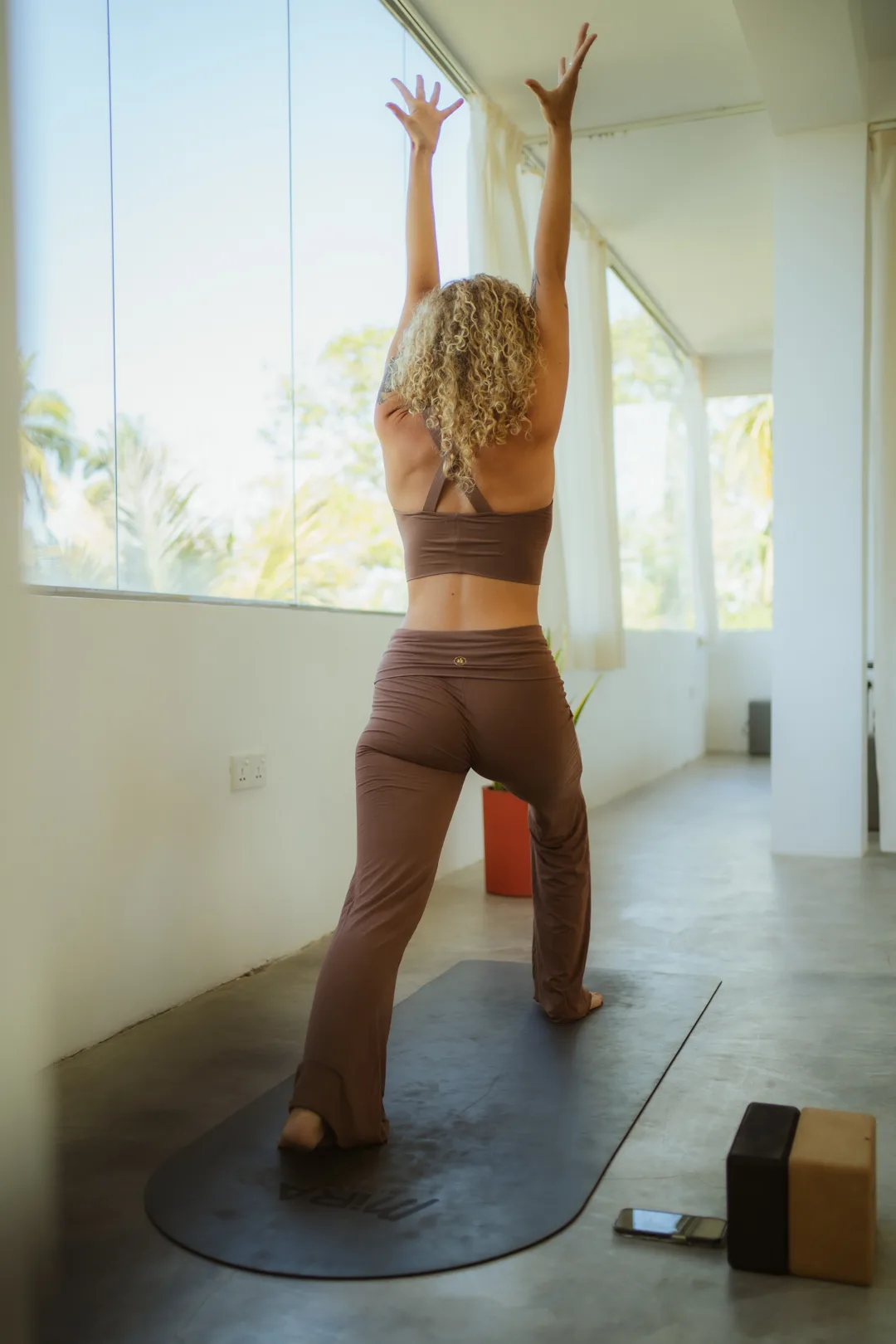
The heat, which is not the same as hot yoga
An unshaded open shala at 10am in April is well over thirty degrees with humidity to match. This is not a hot yoga class. Hot yoga is a controlled 38 degrees with a teacher watching you. This is uncontrolled heat, usually with no water available, in a class that was designed for cooler conditions.
You will sweat more than you expect, your grip will go, and standing balances become genuinely difficult on a slick surface. Dehydration sneaks up in a way it does not at home.
Bring water. Many places do not provide it and there is rarely anywhere to buy any nearby.
Practise early or late. Anything between ten and four in an unshaded space is a fight rather than a practice.
Expect your body to behave differently. You will feel more flexible than you are, because heat makes tissue temporarily more compliant. This is the most common way people injure themselves practising in the tropics — going deeper than usual because it feels available, and paying for it two days later.
Nowhere to put anything
This is the small, stupid problem that shapes your whole day.
Most shalas have no lockers, no secure storage, and often nobody at a front desk at all. You arrive with a phone, a wallet, a passport copy and a scooter key, and you leave them in a pile by the wall in a space that is open to a garden.
It means you cannot combine a class with anything else. You cannot come straight from the beach, because there is nowhere to leave a bag and nowhere to rinse off afterwards. You cannot go on somewhere afterwards. The class becomes an errand that has to be done from your accommodation and returned to.
Bring as little as possible. A phone and enough cash for the class.
Ask about a shower before you plan your day around one. Very few places have them, and fewer mention it either way.
If you are staying somewhere with a studio in the building, use it more than you think you will. The convenience is not a small thing over two weeks.
What actually keeps a practice going on the road
Everything above sounds discouraging. It is not meant to be — the practising is often excellent and the teachers are frequently better than what you have at home. But the logistics are what determine whether you go three times or fifteen.
Three things make the difference.
Pick somewhere close. Not the best studio within an hour. The decent one within ten minutes. You will go to the second one four times as often.
Pay up front. A class pack bought on day one is the most reliable motivation there is. Sunk cost works.
Go in the morning. Cooler, fewer mosquitoes, more likely to actually run, and it happens before the day finds reasons to stop you.
Where we come into it
We built our studio partly in response to all of the above. It is enclosed and air-conditioned, so ten in the morning is comfortable rather than a fight. The mats are ours and cleaned between classes. There are lockers, a changing room and a shower, so you can come from the beach and go somewhere afterwards. And the schedule is live rather than a chalkboard — what it says is running, is running.
None of that makes the practice better than an open shala at sunrise with a teacher who has done this for thirty years. It makes it more likely you will still be practising in week two.
If you are in Mirissa, our daily yoga classes are $10 and you can drop in without booking. And if you are somewhere else on this coast, the advice above still holds: message ahead, bring your own mat, and go in the morning.