

How much does a yoga class cost in Mirissa?
What to expect to pay for drop-in yoga in Mirissa, what makes one class cost twice another, and when a class pack is actually worth buying.
Nobody publishes this properly, which is why you are reading it. Most guides to yoga in Sri Lanka were written years ago, quote prices in a currency that has moved a long way since, and list studios that have closed.
So: a drop-in yoga class in Mirissa costs somewhere between about LKR 1,500 and LKR 3,000, or roughly five to ten US dollars. That is a wide spread for sixty minutes on a mat, and the spread is the interesting part.
Why one class costs twice another
The price of a yoga class here is almost entirely a function of what the space costs to run.
| What you are paying for | Cheaper end | Higher end |
|---|---|---|
| The room | Open-air shala, garden, rooftop | Enclosed studio with air conditioning |
| Equipment | Bring your own mat, or a thin shared one | Mats, blocks, straps and bolsters provided |
| Class size | Whatever turns up | Capped, so everyone gets space |
| The teacher | Local teacher, often self-taught, often excellent | Internationally certified, usually travelling |
| Frequency | One or two classes a day, seasonal | A full daily timetable, year-round |
| Payment | Cash only | Card accepted |
None of that makes the cheaper end worse. Some of the best classes on this coast happen in open shalas with a teacher who has practised for thirty years and charges LKR 1,500. What it means is that price here signals overheads rather than quality, and you cannot read one from the other.
The one thing price does reliably tell you about is the room. Air conditioning is expensive to run in a tropical climate, and any studio with it will charge accordingly. Whether that is worth paying for depends entirely on when you practise. At seven in the morning, an open shala with a sea breeze is lovely. At ten, with the sun already up and the humidity climbing, it is a different experience.
Cash, cards, and the thing nobody warns you about
A lot of yoga in Sri Lanka is a cash business. Several well-regarded studios take rupees only, some do not have a card machine at all, and a few will quote you a price on the phone that differs from the one at the door.
Three practical rules:
Confirm the price before you go, especially if you found the place through a hotel or a tuk tuk driver. Both take commissions, and both occasionally quote optimistically.
Carry cash for anywhere open-air. If it is a garden or a rooftop, assume cash.
Check where it actually is. Several of the most-recommended shalas near Mirissa are not in Mirissa. They are in Ahangama, Unawatuna or up in the hills — thirty to sixty minutes each way by tuk tuk, which adds LKR 1,500 to 3,000 to the cost of the class and an hour to your morning. That is fine if you planned for it. It is annoying if you did not.
When a class pack is worth it
Most places that sell packs drop the per-class price by around a third. The maths is simple and worth doing before you buy.
A pack usually pays for itself somewhere around the fourth class. If you are in Mirissa for three days and plan to practise twice, pay per class. If you are here for a week or more and think you will go most mornings, the pack is the obvious choice — and it has a second effect that is easy to underestimate. Having already paid gets people out of bed. A pack bought on day one is the single most reliable way to actually practise on holiday rather than intending to.
Two things to check before buying one:
Does it expire? Some packs run out after a month, which is irrelevant if you are here for ten days and a problem if you are coming back in the winter.
Is it transferable? If you are travelling with someone, a pack you can share is worth considerably more than one you cannot.
What we charge
For the sake of being useful rather than coy: a drop-in yoga class at MiRA is $10, charged in the rupee equivalent. A four-class pack brings that to $8 a class, and the pack does not expire. If you are staying with us, everything is 20% off, and until 31 October 2026 it is 50% off.
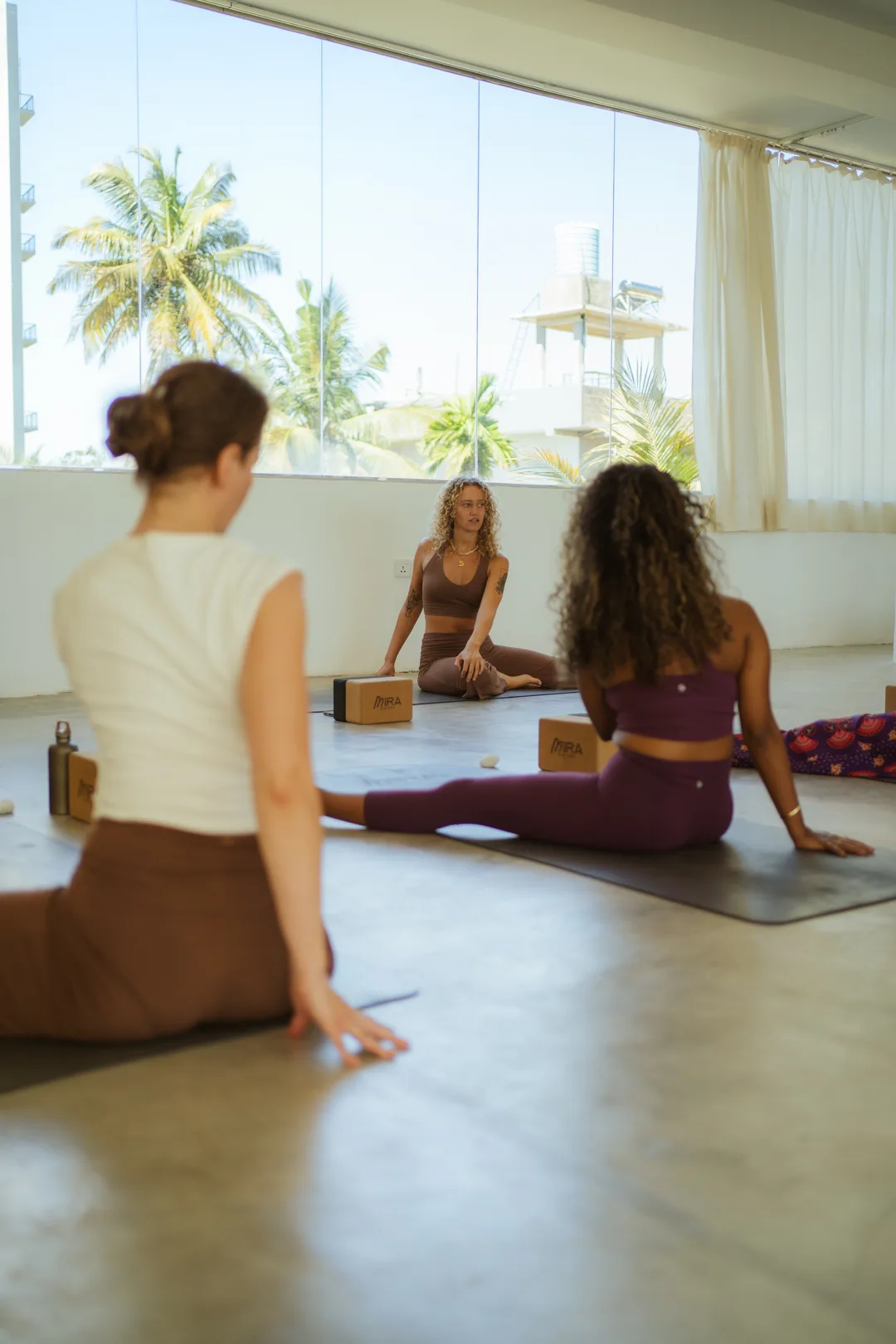
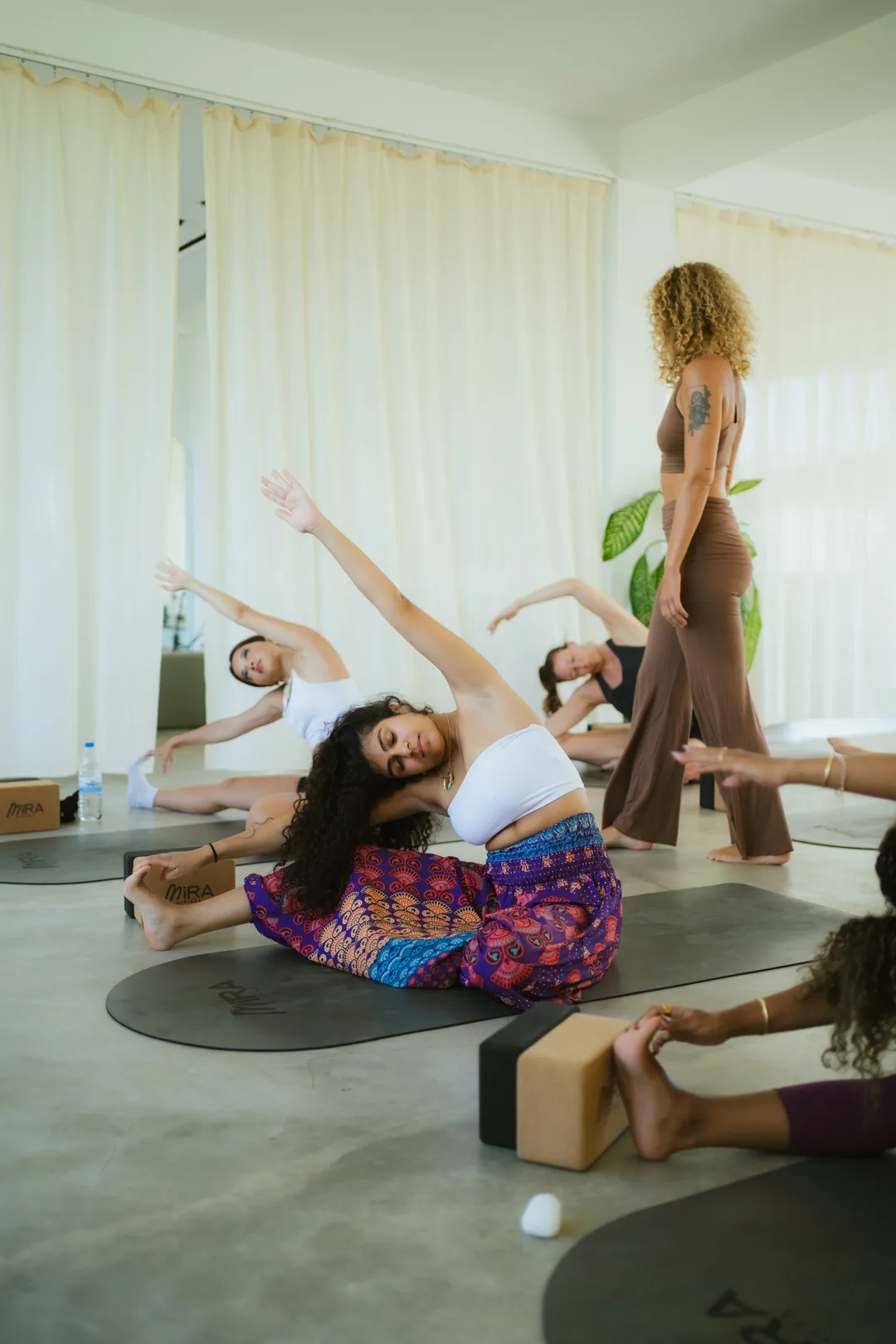
That puts us at the upper end of the Mirissa range, and it is worth being straight about why. The studio is air-conditioned and enclosed, mats and props are provided and cleaned, the timetable runs every day rather than seasonally, and we take cards. If those things do not matter to you, there is genuinely good yoga in this town for less, and you should go and find it.
What we would say is this: if you are practising once, price barely matters — the difference between the cheapest and the most expensive class in Mirissa is about the cost of a coffee and a tuk tuk. If you are practising most days for two weeks, it adds up, and so does the ninety minutes a day you spend travelling to somewhere that is not actually in Mirissa.
The short version
Expect to pay LKR 1,500 to 3,000, or five to ten dollars. Cheaper usually means open-air and cash-only, not worse. Confirm the price and the location before you go. Buy a pack if you are staying more than four days, and check whether it expires.
And if you want to see what a class here is like before committing to anything, drop in without booking — there is usually space, and nobody minds if it is your first one.