

We finally have reformer pilates in Mirissa
What a reformer actually does that a mat cannot, why it suits people who have been surfing all week, and what to expect in a first class on Sri Lanka's south coast.
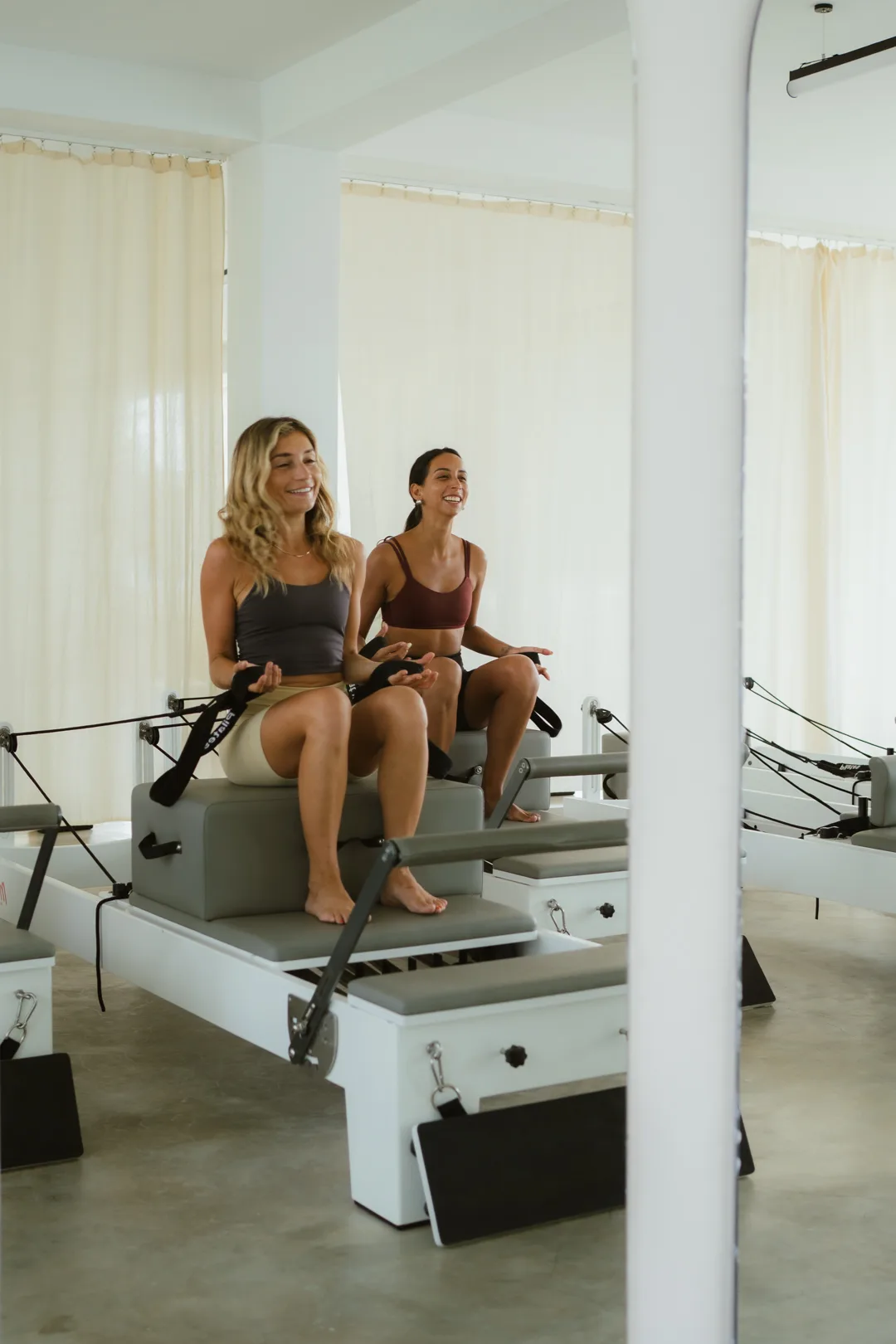
Joseph Pilates built the first reformer out of bed springs. He was interned on the Isle of Man during the First World War, working with patients who could not get up, and he rigged springs to the frames so they could work against resistance while lying down. The machine that ended up in boutique studios a century later was designed for people who were too weak to stand.
That origin explains the thing most people misunderstand about it. A reformer is not a harder version of mat Pilates. The springs are as often assisting you as resisting you, which is why the same machine is used in physiotherapy clinics and by professional athletes, and why a first class does not require you to already be strong.
What the machine does that a mat cannot
On a mat, gravity is your only load and it always pulls in one direction. That limits which muscles you can isolate and how precisely you can load them.
The reformer changes three things. The carriage slides, so your body has to stabilise against movement rather than just hold a position. The springs can be set light or heavy, so resistance is adjustable in small increments rather than being your entire body weight or nothing. And the straps and footbar let you work lying down, on your side, kneeling or standing, which opens up planes of movement a mat cannot reach.
The practical result is that you can load a specific muscle group accurately while something else supports you. That is the whole point, and it is why the reformer is useful for a stiff person on their first session and a strong person on their five-hundredth.
Why it works for this coast specifically
Paddling is a repetitive movement with a narrow range. Hours of it means shoulders internally rotated, chest tight, thoracic spine locked into extension, and the deep stabilisers around the shoulder blade doing very little. Long scooter rides and laptop days compound the same pattern from a different direction.
Reformer work targets the opposing chain almost by default. Rotation, thoracic mobility, scapular control, posterior shoulder. A week of surfing followed by two reformer sessions will feel different in your paddling within a few days, which is the sort of thing people notice before they understand why.
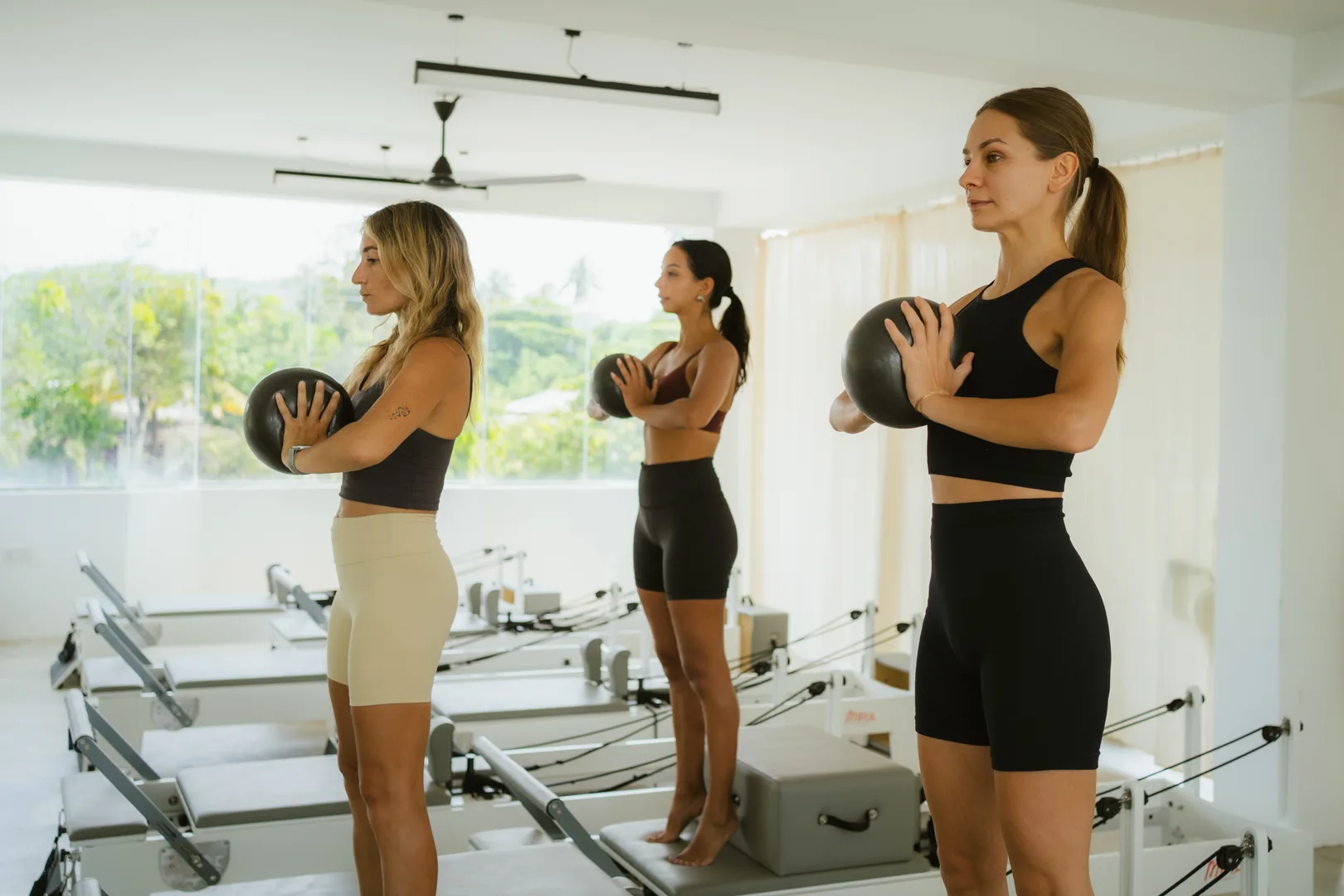
What actually happens in a first class
You will be asked about injuries before anything else. This matters more on a reformer than a mat, because spring tension can be adjusted around a problem rather than you working around it.
The instructor sets your footbar height and spring load, shows you the safety chain and the headrest, and starts you with footwork lying on your back. That first ten minutes looks unremarkable and is doing a lot: it teaches you how the carriage responds so that later exercises make sense.
Expect to be corrected often. That is the format working, not you doing badly. Expect it to be harder than it looks and less frightening than it looks, in that order.
Wear something fitted enough that the instructor can see your alignment, and grip socks if you have them. We keep spares.
The studio
The reformer studio at MiRA has twelve machines and is air conditioned, which on this coast is not a luxury. A reformer class in 32-degree humidity is a different and worse experience.
Sessions must be booked ahead because there are twelve spaces and they fill. Drop-in is 20 US dollars, and guests staying at MiRA get 20% off every class. Until 31 October 2026 that rises to 50%. If a reformer is not what you are after, there is mat Pilates and yoga daily, vinyasa and slow flow, around 35 classes a week from early morning to sunset.
Afterwards there is a rooftop ice bath held at 5°C, open 9:30 to 12:30 daily, five dollars. Cold immersion after resistance work is well supported for reducing delayed onset soreness, though worth knowing: if your goal is building muscle, the evidence suggests cold straight after strength training may blunt some of the adaptation. For recovery between surf sessions, which is what most people here are doing, that trade-off does not apply.
Who it is not for
If you want cardio, this is not it. A reformer class will leave you shaking without leaving you out of breath, and people expecting a workout in the conventional sense sometimes find that anticlimactic.
If you have an acute injury rather than a stiff one, see a physiotherapist first. The reformer is used in rehab settings but a group class is not rehab, and an instructor managing eleven other people cannot give you what a one-to-one assessment would.
And if you have never done any Pilates, start with the reformer rather than the mat, which is the opposite of what most people assume. The machine gives you feedback that a mat cannot, and feedback is most of what a beginner needs.