

Cold plunges: what the evidence actually supports
What happens to your body in cold water, which claimed benefits hold up and which do not, who should avoid it, and how to do your first plunge without panicking.
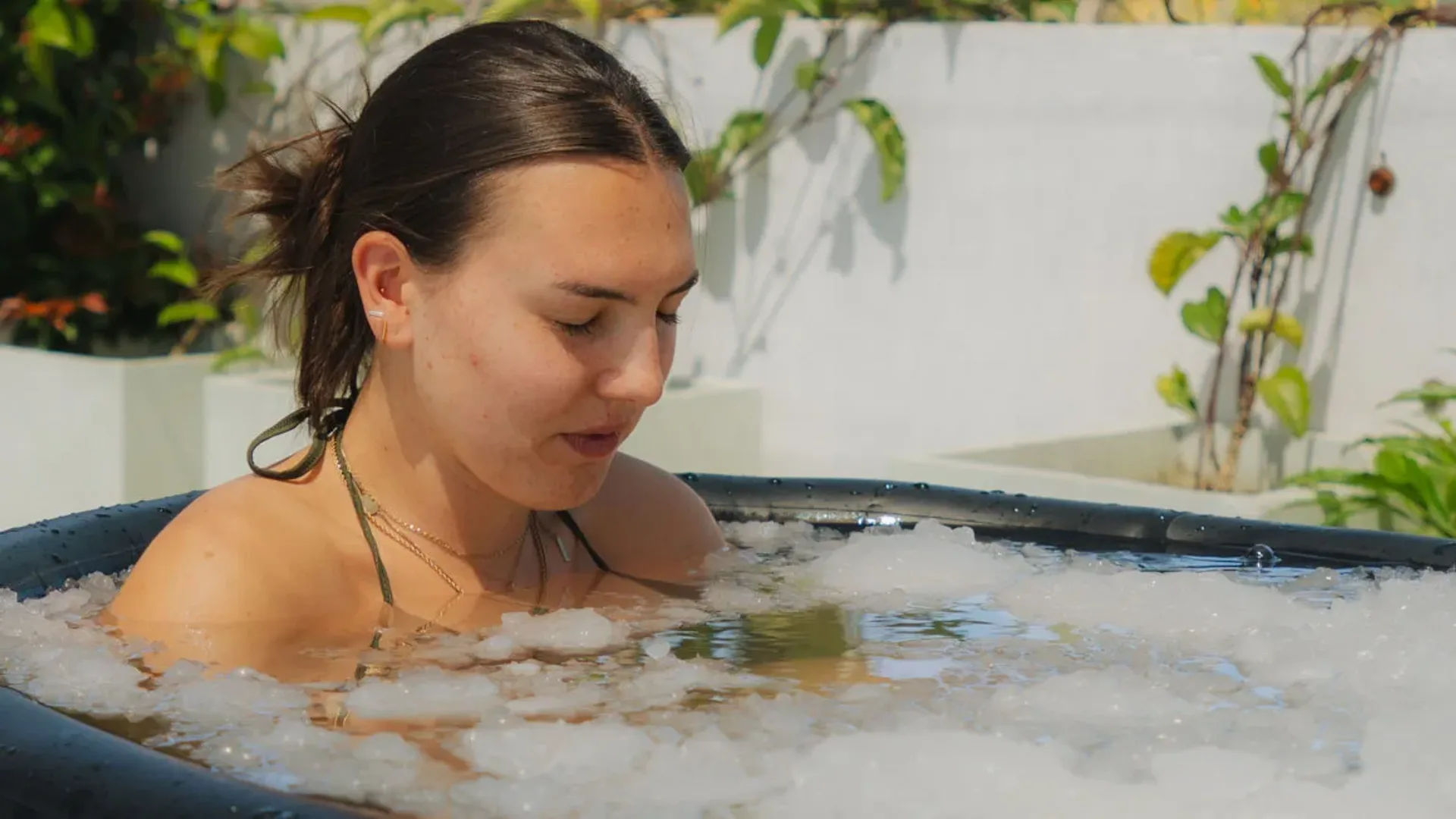
Cold plunging went from obscure to unavoidable in about five years. It is now credited with improving mood, metabolism, immunity, recovery, sleep, focus and inflammation, which should itself make you suspicious. Very few things do all of that.
Some of it holds up. Some of it does not. Here is an honest look, including the parts that argue against it.
What actually happens when you get in
The first thing is the cold shock response. Within seconds of immersion your breathing rate jumps, you gasp involuntarily, your heart rate rises and your blood pressure spikes. This is automatic and it is the reason the first fifteen seconds feel alarming.
It is also the dangerous part, which we will come back to.
Your blood vessels constrict at the surface, moving blood towards your core. Your body releases noradrenaline, and this is well documented, with studies showing substantial increases during cold water immersion. Noradrenaline affects alertness, mood and attention, and it is the most likely mechanism behind the way people feel afterwards.
That post-plunge feeling is real. Whether it amounts to a lasting health benefit is a separate question.
What the evidence reasonably supports
Mood and alertness in the short term. This is the best-supported effect and it is consistent with the noradrenaline response. People generally feel better after cold immersion, and they feel it quickly.
Perceived recovery after exercise. Athletes have used cold water immersion for a long time, and it does reduce soreness. Whether it speeds actual tissue recovery or mainly changes how recovery feels is less clear.
Some cardiovascular and metabolic adaptations with repeated exposure. There is research here, though it is generally small-scale, and the size of the effect in ordinary people living ordinary lives is not well established.
What is oversold
Inflammation reduction as an unqualified good. Cold immersion does blunt the inflammatory response. That is precisely why it is questionable after strength training: inflammation is part of how muscle adapts and grows, and several studies suggest that regular cold immersion straight after resistance training may reduce strength and muscle gains over time. If you are lifting to build muscle, plunging immediately afterwards may work against you.
Immunity. The claims run well ahead of the evidence. There is some research suggesting fewer sick days with regular cold showers, but it is a thin base for the confidence with which this gets repeated.
Fat loss. Cold exposure does activate brown adipose tissue and increase energy expenditure. The amounts involved are small and unlikely to change body composition on their own.
Anything described as detoxification. This is not a meaningful physiological claim.
Who should not do this
This part matters more than the benefits.
The cold shock response raises heart rate and blood pressure sharply. If you have a heart condition, high blood pressure, a history of arrhythmia, or any cardiovascular disease, do not do this without talking to a doctor first. This is the mechanism by which cold water immersion has killed people, and it is not a theoretical risk.
Also check with a doctor if you are pregnant, have Raynaud’s, have a history of cold urticaria, or have any condition affecting circulation or nerve sensation.
Never plunge alone. Never plunge after drinking. Do not combine it with breath-holding exercises in water, which is a genuinely dangerous combination that has caused deaths through shallow water blackout.
If you feel unwell, get out. This is not something to push through.
How to actually do it
Get in deliberately rather than jumping. Jumping in maximises the shock response, which is the part you want to manage.
Focus on lengthening your exhale. The gasp reflex is automatic, but you can override the panicked breathing that follows it within about fifteen to thirty seconds. Long exhales are the whole technique. Once your breathing settles, the rest is manageable.
Two to four minutes is plenty for most people. Longer is not better, and the marginal benefit past a few minutes is small compared with the added risk.
Warm up gradually afterwards. Move around, put clothes on, have something warm. Do not go straight into a hot shower, which can cause dizziness.
If you are training for strength, leave several hours between lifting and plunging rather than doing them back to back.
How cold, and does it matter
Most of the research uses temperatures roughly between 10°C and 15°C, and plenty of the benefit appears at the milder end. Colder water is not automatically better, it just makes the same duration harder.
Our ice bath runs at 5°C, which is at the cold end. That means two to four minutes is a reasonable target rather than a starting point to build past.
The honest summary
Cold plunging reliably makes people feel alert and good afterwards, and that is a legitimate reason to do it. The evidence for the broader health claims is weaker than the enthusiasm suggests, and in at least one case, muscle growth after strength training, it may work against you.
It is not a health intervention that replaces sleep, food or movement. It is a short, unpleasant, oddly enjoyable thing that most people feel better for having done.
With us
The rooftop ice bath runs at 5°C, daily from 9:30 to 12:30, and costs $5 flat. Breathing guidance is included and you do not need to book.
Guests staying with us get 20% off classes, however they booked. Until 31 October 2026 that rises to 50%.